Development Sites Requiring Multi-Phase Coordination
Commercial Site Prep in Buchanan for development projects needing grading, clearing, drainage, and equipment coordination before construction begins
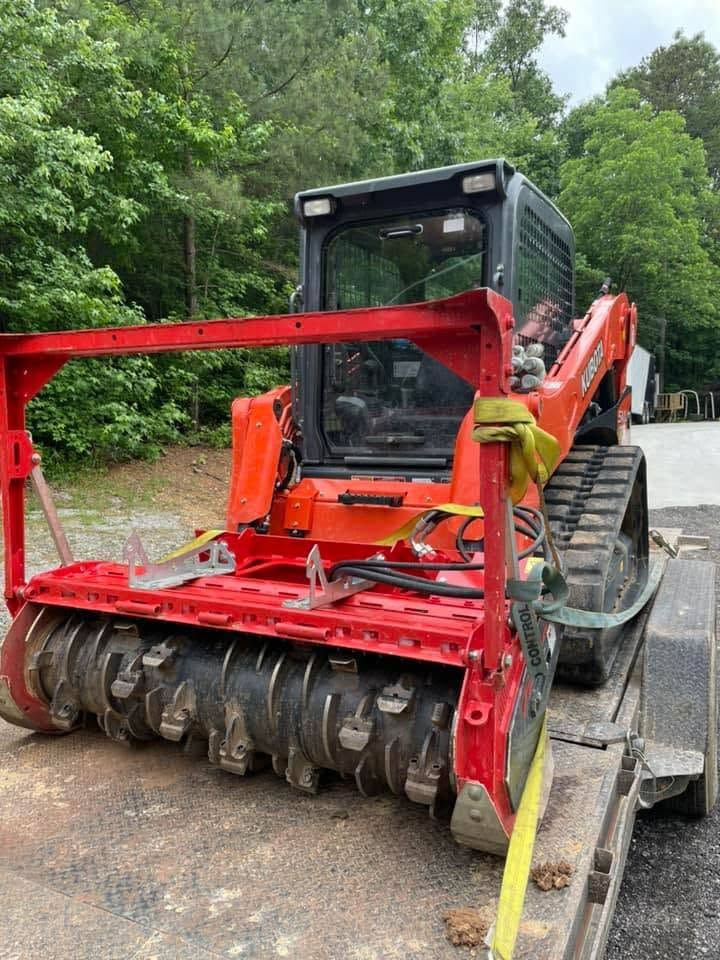
Commercial development corridors along I-20 and through Cedartown, Carrollton, and Dallas create demand for site preparation that integrates multiple phases into unified project management. Pollard Land Management LLC prepares commercial sites across North Georgia, handling the transition from raw land to construction-ready ground through forestry mulching, grading, drainage installation, and heavy equipment operations. AI-assisted bidding improves takeoff accuracy for material quantity estimates, reducing change orders that typically inflate costs when initial bids underestimate earthwork volume or drainage requirements.
Site prep involves clearing vegetation and debris, establishing grade for water flow away from future structures, installing drainage systems that handle stormwater runoff, and coordinating equipment scheduling with other trades when foundation or utility work follows immediately. Seven years of commercial project experience supports multi-phase coordination, where delays in one phase cascade into scheduling conflicts with contractors waiting for site access. Winter freeze and fuel economics affect project feasibility within the service territory, as extended drive times to sites beyond the I-20 corridor increase transportation costs that commercial budgets may not accommodate.
Arrange a site consultation to review project scope, drainage requirements, and coordination timelines for your development property.
How Site Prep Sequencing Prevents Construction Delays
Commercial site preparation follows sequencing that prevents rework: clearing removes vegetation and surface debris first, grading establishes drainage flow patterns and building pad elevation, and drainage installation directs stormwater away from construction zones before foundation contractors arrive. Construction background expertise allows coordination decisions that account for trade scheduling, such as completing earthwork before concrete crews mobilize or ensuring access routes support delivery truck weight during material transport. Projects in Dallas, Paulding County, Douglas County, and along the I-20 corridor benefit from service territory focus that excludes distant zones like Douglasville where drive time reduces profitability.
After site prep completes, you'll observe level building pads with stable compaction that supports structural loads, drainage channels that remain dry except during active rain events, and access routes that allow heavy equipment and delivery trucks to enter without creating ruts that require regrading. Proper site prep eliminates standing water that delays foundation work and prevents erosion that undermines newly graded surfaces before construction stabilizes the site.
Integrated service delivery means forestry mulching, grading, drainage design, and heavy equipment work occur under single-project management rather than requiring coordination across multiple subcontractors. This reduces communication gaps where one contractor's work creates problems for the next phase, such as inadequate drainage that floods areas already graded or access routes placed where utility trenches will later require regrading. Projects requiring larger scope than typical residential clearing benefit from equipment capability and experience managing commercial timelines where construction schedules impose firm completion deadlines.
Common Questions About Commercial Site Preparation
Site prep projects vary based on development type, existing site conditions, and coordination requirements with other construction trades.
What's included in commercial site prep that differs from residential clearing?
Commercial site prep integrates grading for stormwater management, drainage system installation to meet development regulations, and coordination with multiple trades whose schedules depend on site readiness, whereas residential clearing often focuses primarily on vegetation removal and basic access.
How does AI-assisted bidding improve project cost accuracy?
AI tools analyze site plans and generate material quantity takeoffs with greater precision than manual estimation, reducing change orders caused by underestimated earthwork volume or drainage material needs that inflate costs after work begins.
Why does service territory stop at the Douglasville cutoff despite I-20 corridor growth?
Hour-plus drive times beyond that point reduce profitability through fuel costs and travel time that cannot be recovered in competitive commercial bids, so service discipline maintains focus on zones where project economics remain viable.
How does winter weather affect commercial site prep scheduling in West Georgia?
Ground freeze between late December and early March limits heavy equipment operation and earthwork, so projects ideally schedule site prep during months when soil conditions allow grading and compaction without frost interference that compromises drainage performance.
What coordination happens between site prep and other construction phases?
Site prep timing aligns with foundation contractor schedules, utility installation plans, and delivery access needs, ensuring earthwork completes before trades requiring stable ground and drainage systems arrive to begin structural work.
Pollard Land Management LLC handles commercial site preparation across North Georgia growth corridors, with seven years of experience managing multi-phase projects and trade coordination. Contact (770) 713-0972 to discuss site prep requirements and project timelines for your development property.