Shaping Sites for Proper Drainage Flow
Grading & Dirt Work in Buchanan for properties needing soil leveling, slope correction, or drainage integration before construction
West Georgia soils and the freeze-thaw cycles common throughout the Buck Canyon region demand grading techniques that account for seasonal ground movement and water management, especially when preparing sites for driveways, building pads, or drainage systems that must function year-round without erosion or settlement failures. Pollard Land Management LLC provides grading and earthwork across Buchanan and the surrounding North Georgia area, using heavy equipment and AI-assisted takeoff methods to calculate dirt volume, cut-and-fill requirements, and the specific slope angles needed for effective drainage on properties where natural terrain doesn't support development without modification. The service area extends through Dallas, Douglas County, Paulding County, Cedartown, Carrollville, and into the Anniston area when project size justifies travel distances exceeding an hour from the shop.
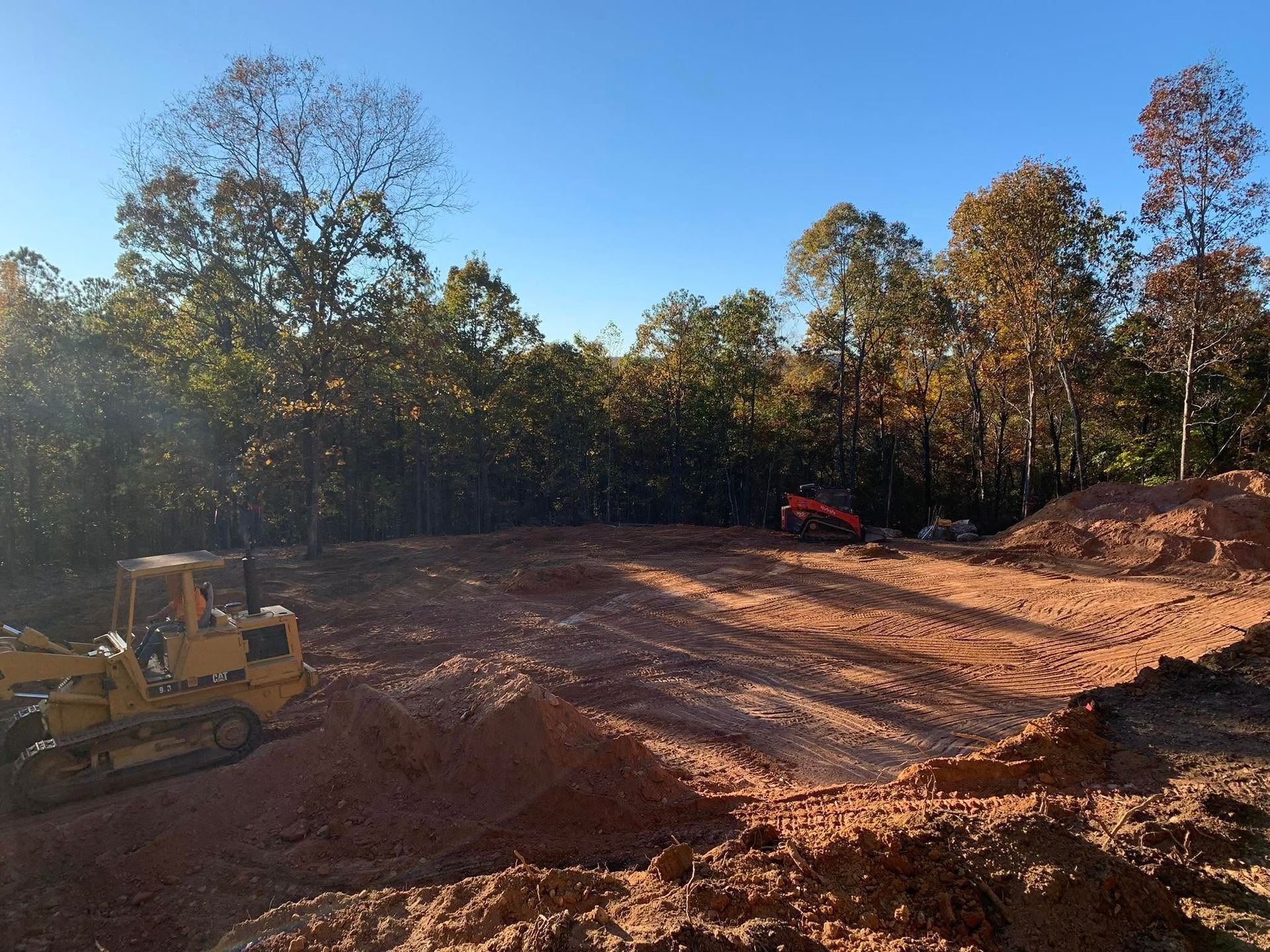
Grading involves excavating high spots, filling low areas, and establishing slopes that direct water away from structures or toward designated drainage routes, with dirt quantities calculated through digital takeoff tools that improve bid accuracy compared to visual estimates. The process coordinates with drainage system installation and driveway construction when site preparation requires multiple services to complete the development scope, reducing the need for separate contractors and ensuring soil compaction, slope angles, and surface preparation align across all phases of the project.
Schedule a site evaluation to determine grading requirements and earthwork volume for your property.
Why Slope and Compaction Determine Long-Term Site Performance
Proper grading establishes the drainage slopes that prevent water from pooling near foundations, washing out driveways, or creating erosion channels across exposed soil surfaces. Heavy equipment operation includes skid steer and excavation machinery that moves soil, compacts fill material, and shapes terrain to meet the slope angles required for water to flow toward swales, culverts, or natural drainage outlets. Fuel economics and seasonal ground conditions drive project efficiency decisions, particularly during winter when frozen ground limits equipment operation and spring when rainfall complicates dirt work on uncompacted surfaces.
After grading finishes, you'll notice water flows away from structures during rainfall instead of pooling in low spots, driveways sit at elevations that prevent washout, and building pads remain level without settlement over time because fill material was compacted properly during placement. The owner's construction background informs grading decisions, accounting for how structures, driveways, and drainage systems will interact with the prepared soil surfaces once development continues beyond the earthwork phase.
Grading projects include dirt volume calculations, equipment operation for cut-and-fill work, and coordination with drainage installation when site preparation requires integrated services, but they do not include final surface treatments like gravel placement or paving unless those services are explicitly added to the project scope. Seven years of regional experience means the grading approach accounts for local soil types, seasonal weather patterns, and the specific site conditions that affect equipment access and project timelines throughout the Buchanan service area.
What Property Owners Need to Know About Earthwork
Grading decisions affect drainage performance, driveway longevity, and foundation stability, so understanding what the process involves and how soil conditions influence project outcomes helps property owners prepare for site development work.
How do you calculate dirt volume for grading projects?
AI-assisted takeoff tools analyze site dimensions, existing elevations, and target slopes to calculate the amount of soil that needs to be cut, filled, or hauled, improving bid accuracy compared to manual estimates and reducing the risk of material shortages or overages during the project.
What happens if the ground freezes during a grading project?
Frozen soil prevents excavation and compaction equipment from operating safely because the ground becomes too hard to shape properly and compaction efforts fail to achieve the density required for long-term stability, so winter projects depend on temperature patterns and may require delays if freeze conditions persist.
Can grading be combined with driveway and drainage installation?
Yes, coordinating grading with driveway construction and drainage system installation ensures slopes, elevations, and compaction levels align across all site preparation phases, reducing project duration and eliminating the need for separate contractors to revisit the property for follow-up work.
How far does the service area extend from Buchanan?
Projects within Dallas, Paulding County, Douglas County, Cedartown, Carrollton, and Rock Mart are manageable within the typical service radius, with longer travel distances into the Anniston area justified by project size and earthwork scope, though areas closer to Atlanta fall outside the service boundary due to profitability constraints related to fuel costs and travel time.
What should I prepare before grading work begins?
Mark boundary lines, underground utilities, and areas to avoid, and ensure equipment access routes are clear because heavy machinery requires entry points wide enough for tracked or wheeled units and firm ground that supports equipment weight during soil movement and compaction operations.
Pollard Land Management LLC uses technology to refine bid accuracy on earthwork scope, ensuring grading projects start with realistic dirt volume calculations and equipment requirements based on site-specific conditions rather than generic per-acre pricing. Request a detailed estimate to identify grading needs and coordinate with your construction or development timeline.