Removing Vegetation for Site Development Use
Land Clearing in Buchanan for properties requiring full vegetation removal and site preparation before construction or grading begins
Properties overgrown with mixed vegetation, fallen timber, and dense brush prevent construction access and complicate grading work, creating delays before any site development can begin. Pollard Land Management LLC clears residential and commercial land throughout Buchanan and the surrounding North Georgia region, removing vegetation down to bare soil and preparing sites for the next phase of work, whether that involves foundation installation, driveway construction, or drainage system integration. Seven years of regional experience means the clearing process accounts for West Georgia soil conditions, winter slowdown caused by ground freeze, and the fuel cost considerations that affect project profitability when working near county lines or extending into the Anniston area.
Full vegetation removal involves cutting, grinding, or uprooting all plant material, then either processing it on-site or hauling it away based on project requirements and the condition you need the land left in. Land clearing differs from selective forestry mulching because the goal is complete removal rather than converting vegetation into ground cover, which matters when you're preparing a building pad, creating access roads, or establishing drainage routes that require unobstructed soil surfaces for grading equipment to shape properly.
Arrange an on-site consultation to review vegetation density and site preparation requirements for your development timeline.
How Full Clearing Prepares Land for Construction
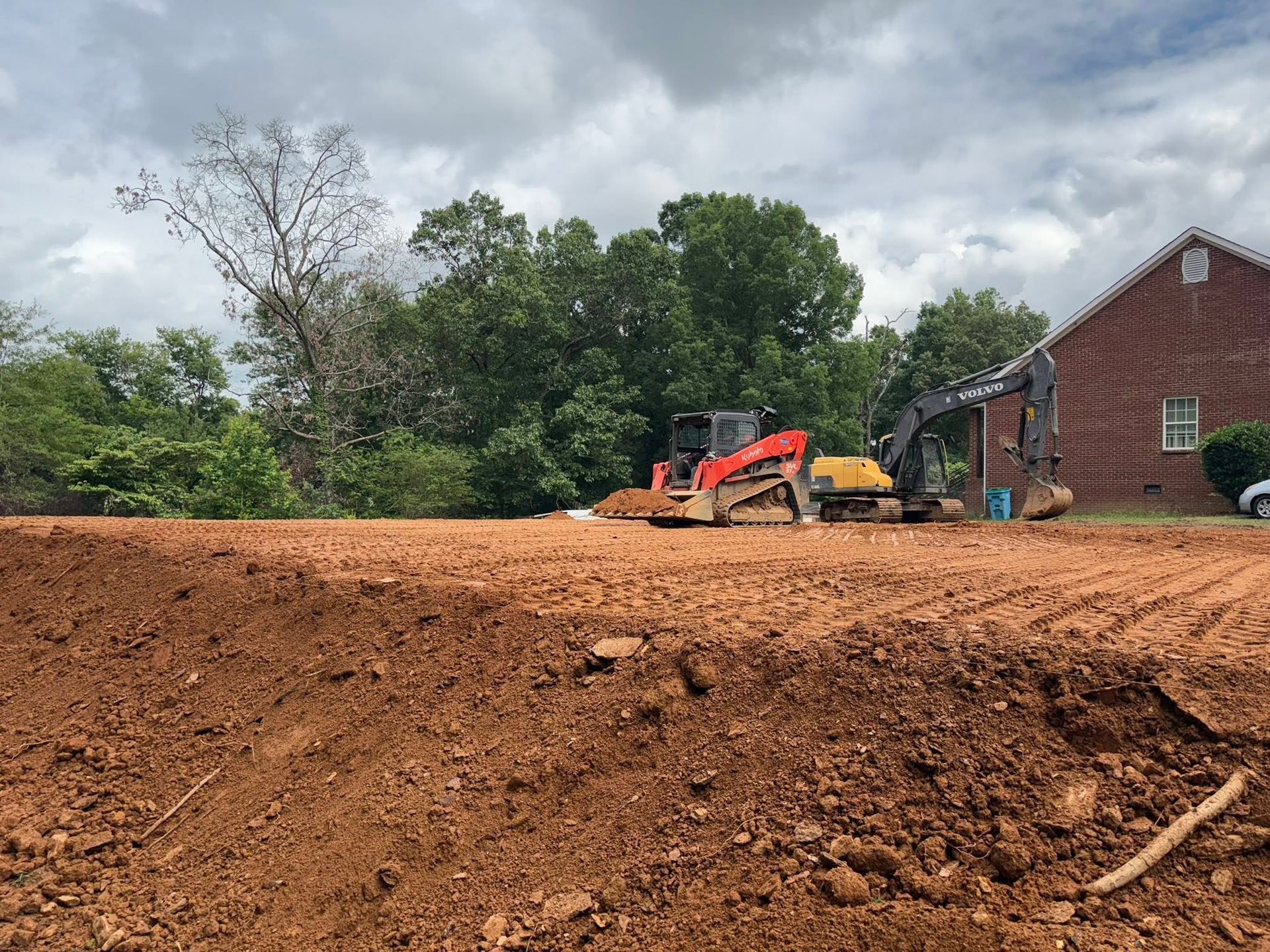
The clearing process removes stumps, roots, and debris that would interfere with excavation or grading equipment, exposing the underlying soil profile so you can assess drainage needs, compaction requirements, and any fill or cut work necessary before construction begins. Heavy equipment operation includes skid steer and excavation machinery capable of handling root systems, rock removal, and vegetation disposal, with project estimates developed using AI-assisted takeoff methods that calculate material volume and labor requirements based on site-specific conditions rather than generic per-acre pricing.
Once clearing finishes, you'll see bare ground with vegetation and root systems removed, a soil surface ready for grading or compaction, and elimination of the obstacles that previously prevented equipment access or site assessment. This cleared condition allows grading contractors to establish proper drainage slopes, building pads to be excavated without obstruction, and driveway routes to be cut without navigating around standing trees or buried stumps. The service area extends 60 to 70 miles from the Buchanan shop, covering Cedartown, Carrollton, Dallas, Douglas County, Paulding County, Rock Mart, and into Alabama near Anniston, though projects closer to Atlanta and Cobb County are excluded due to travel time and fuel economics that impact profitability on land clearing contracts.
Pollard Land Management LLC integrates land clearing with grading and drainage services when site development requires coordinated phases, reducing the need for multiple contractors and ensuring the cleared land transitions directly into the next construction step. The owner's construction background, including experience with vinyl and metal roofing installation, informs the clearing approach to account for how buildings, access routes, and drainage systems will eventually occupy the prepared site.
Answers to Common Land Clearing Questions
Understanding what land clearing involves and how it differs from other vegetation management services helps property owners plan site development timelines and coordinate follow-up work like grading or construction access installation.
What gets removed during a full land clearing project?
All vegetation including trees, stumps, root systems, brush, and ground-level plant material is cut, uprooted, or ground down, with debris either processed on-site or hauled away depending on whether you need bare soil or can accommodate mulched material as temporary ground cover.
How does winter weather in West Georgia affect clearing schedules?
Ground freeze and winter slowdown limit the seasonal window for heavy equipment operation because frozen soil prevents safe excavation and root removal, so projects scheduled during colder months depend on temperature patterns and whether the ground remains workable throughout the clearing timeline.
What's the difference between land clearing and forestry mulching?
Land clearing removes all vegetation and prepares bare soil for construction or grading, while forestry mulching grinds vegetation into mulch that stays on-site as ground cover, so the choice depends on whether your project requires clean soil surfaces or erosion control from processed plant material.
How far can you travel for land clearing projects?
Service extends throughout Buchanan, Cedartown, Carrollton, Dallas, Douglas County, Paulding County, and into the Anniston area when project size justifies fuel costs and travel time, typically within a 60- to 70-mile radius from the shop, though areas closer to Atlanta are excluded due to profitability constraints on clearing contracts.
Can land clearing be combined with grading and drainage work?
Yes, coordinating clearing with grading and drainage installation reduces project duration and ensures the site preparation flows directly into the next development phase without delays caused by scheduling separate contractors or waiting for follow-up bids.
Pollard Land Management LLC currently has availability for seasonal land clearing projects across the North Georgia service area, with estimates prepared using detailed takeoff methods that account for vegetation volume, soil conditions, and site access constraints. Request a property-specific estimate to identify clearing scope and coordinate with your construction or development timeline.