
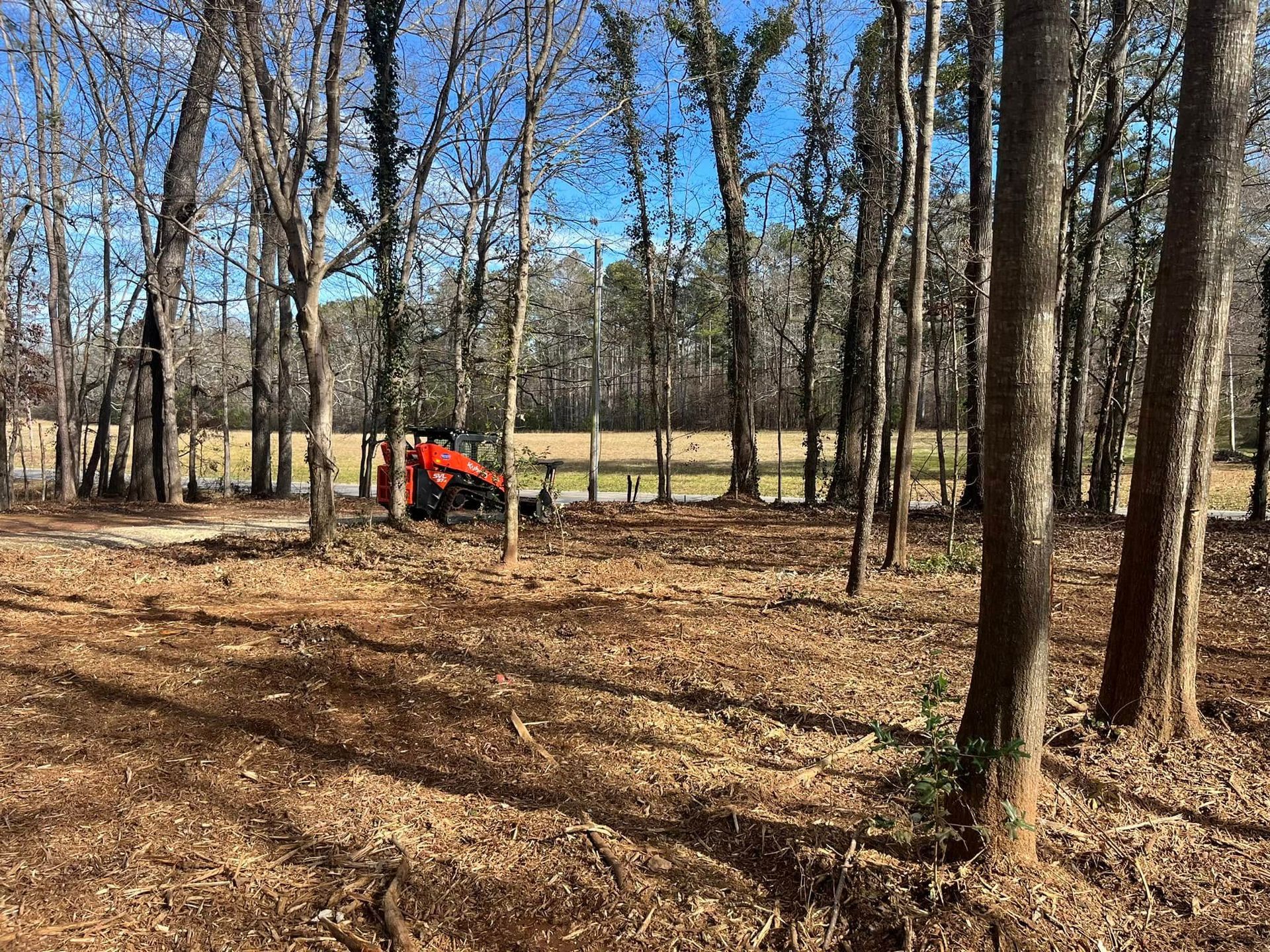
Clearing Land Without Hauling Debris Away
Forestry Mulching in Buchanan for properties needing vegetation cleared and ground into reusable material on-site
Pollard Land Management LLC provides forestry mulching across Buchanan and the surrounding West Georgia region, using on-site grinding equipment that converts standing vegetation into processed mulch without requiring removal trucks or burn piles. This approach matters when you're clearing overgrown pasture, preparing land for construction, or reclaiming wooded areas where hauling costs would otherwise consume your project budget. The mulch stays on your property as ground cover or gets removed based on your specific project requirements, and the entire clearing process happens with equipment designed to handle dense brush, small trees, and tangled undergrowth in a single pass.
The service addresses properties where traditional clearing methods—cutting, piling, and hauling—would require multiple equipment visits and disposal fees that escalate quickly with acreage. Forestry mulching grinds vegetation into uniform material that decomposes naturally, reduces erosion, and eliminates the logistics of coordinating debris removal from rural sites where access roads limit truck maneuverability. Winter ground freeze in West Georgia restricts the seasonal window for this work, so scheduling during months when soil conditions allow equipment operation ensures the job gets completed without delays caused by frozen ground that prevents machinery from moving safely across slopes.
Schedule a property evaluation to determine clearing scope and mulch handling options for your site.
What the Grinding Process Accomplishes on Rural Properties
The mulching equipment processes standing vegetation through a rotating drum fitted with carbide teeth that pulverize wood, brush, and leafy material into chips ranging from fine particles to hand-sized fragments. This grinding action happens at ground level, eliminating stumps flush with the soil surface and leaving a layer of organic material that settles into a continuous mat. The process works efficiently on properties with mixed vegetation density, where saplings, briers, and scrub growth would otherwise require separate cutting and removal steps.
After the clearing finishes, you'll notice open sightlines across previously overgrown areas, a uniform layer of mulch covering exposed soil, and elimination of the tangled brush that prevented access or use of the land. The mulch layer reduces erosion by absorbing rainfall impact and slowing runoff, which matters on sloped properties common throughout the Buck Canyon and Cedartown areas where bare soil would otherwise wash during heavy rain. Pollard Land Management LLC operates throughout a 60- to 70-mile radius from the Buchanan shop, handling projects in Carrollton, Dallas, Paulding County, and into the Anniston area when project size justifies the fuel costs associated with longer travel distances.
The service excludes hauling the mulch product unless removal becomes part of the project scope, which depends on whether you're using the material as ground cover, incorporating it into soil preparation, or need bare earth for construction. Seven years of operating across this region means the equipment selection and grinding approach account for local vegetation types, seasonal ground conditions, and the specific clearing outcomes required for residential land reclamation, commercial site preparation, or pasture restoration projects.
Questions Property Owners Ask Before Clearing Starts
Forestry mulching projects vary based on vegetation density, property access, and how you intend to use the cleared land afterward, so understanding what the process involves helps you prepare your site and set realistic expectations for the timeline and final appearance.
What types of vegetation can forestry mulching handle?
The equipment grinds brush, saplings, small trees up to six or eight inches in diameter, briers, and dense undergrowth, but larger hardwood trees or stumps from previous logging require different removal methods depending on trunk diameter and root structure.
How does winter weather in West Georgia affect scheduling?
Ground freeze during colder months limits equipment operation because frozen soil prevents safe maneuvering on slopes and increases the risk of equipment damage, so clearing projects scheduled between late fall and early spring depend on temperature patterns and soil conditions at the time of work.
What happens to the mulch after grinding?
The processed material stays on-site as erosion control and soil amendment unless your project requires removal, in which case the mulch gets hauled away as part of the clearing scope, with removal costs factored into the estimate based on volume and disposal logistics.
How far does the service area extend from Buchanan?
Projects within 60 to 70 miles from the shop in Buchanan are manageable when acreage and scope justify fuel costs, covering locations like Rock Mart, Douglas County, and the Paulding County line, but areas closer to Atlanta and Cobb County fall outside the service radius due to profitability constraints related to travel time and operating expenses.
What should I do to prepare the property before mulching begins?
Clear any personal items, mark boundary lines or areas to avoid, and ensure equipment access routes are passable, because the mulching machinery requires entry points wide enough for tracked or wheeled units and firm ground that supports the equipment weight during operation.
Pollard Land Management LLC coordinates forestry mulching with grading and drainage work when site preparation requires multiple services, ensuring your cleared land transitions smoothly into the next phase of development or use. Request a detailed estimate based on your property's vegetation density and the specific clearing outcome you need for your project.