Building Access Routes That Handle Seasonal Ground Movement
Driveway & Road Services in Buchanan for rural properties requiring access routes built to withstand freeze-thaw cycles and drainage pressures
Rural driveways and private roads fail when grading shortcuts ignore seasonal ground movement, inadequate drainage allows water to undermine base material, or surface treatments get applied over uncompacted fill that settles unevenly under vehicle weight. Pollard Land Management LLC builds and maintains driveways and roads throughout Buchanan and the surrounding North Georgia region, using equipment expertise and site-specific grading techniques to create access routes that function year-round despite West Georgia freeze-thaw cycles and rainfall patterns that challenge unprepared surfaces. The service area covers Dallas, Paulding County, Douglas County, Cedartown, and Carrollton, with the I-20 corridor near Douglasville marking the eastern service boundary where travel time and fuel economics limit profitability on driveway contracts.
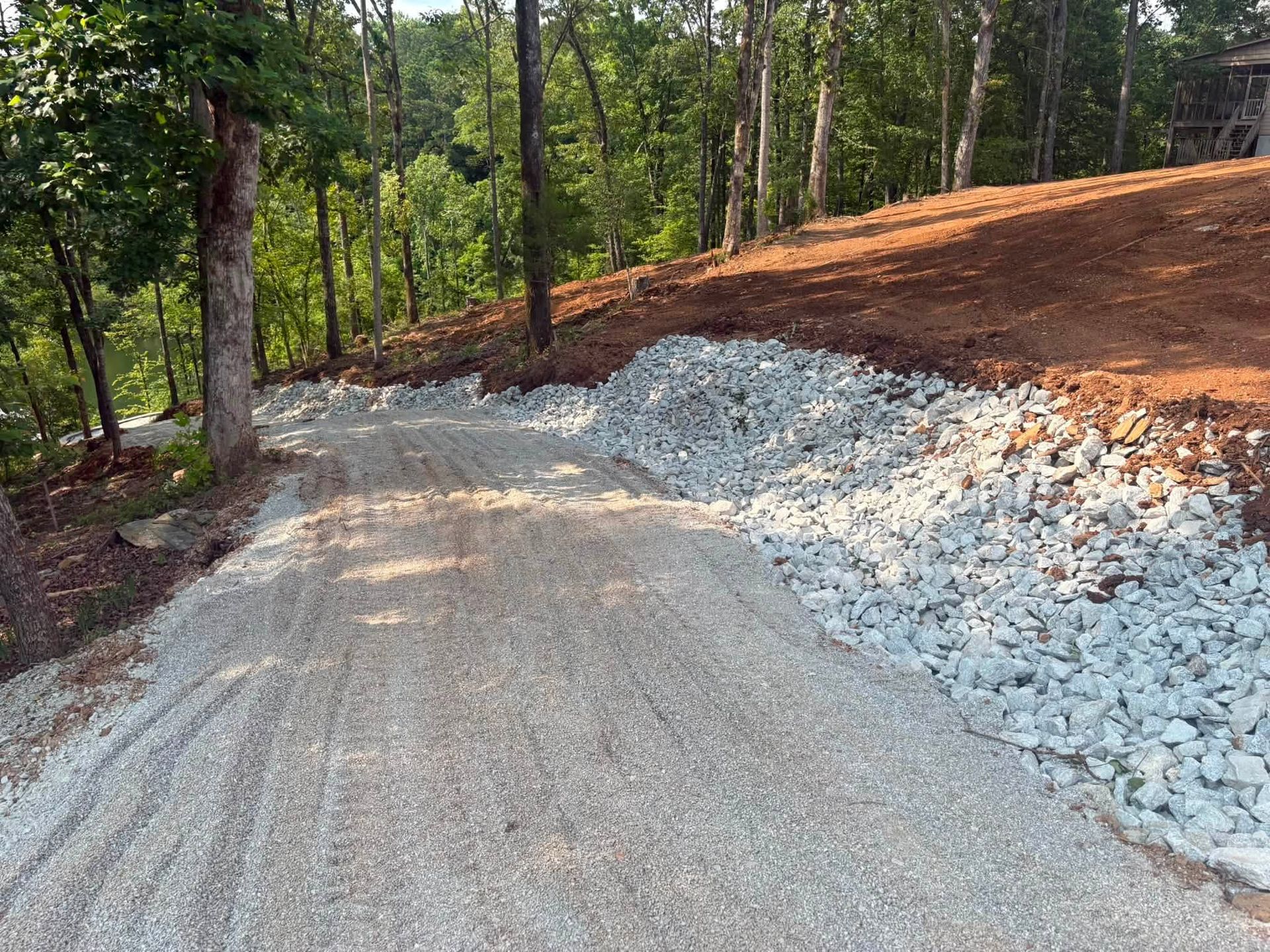
Driveway construction involves grading the access route to establish proper drainage slopes, excavating unstable soil or organic material that would compress under load, installing base material compacted in layers to prevent settlement, and coordinating with on-site drainage and erosion control systems that manage water runoff without washing out the driveway surface. This integrated approach matters because driveways function as both access routes and drainage management features, directing water toward culverts or swales while supporting vehicle traffic without developing ruts, washouts, or surface deterioration caused by inadequate subsurface preparation.
Arrange a property visit to assess access route requirements and drainage integration needs for your driveway installation.
What Separates Functional Driveways from Temporary Fixes
Driveway longevity depends on subsurface preparation more than surface material selection, with compaction quality, base depth, and drainage slope determining whether the access route survives seasonal ground movement without requiring annual regrading or material replenishment. Heavy equipment operation includes skid steer and excavation machinery that excavates native soil, places and compacts base material in controlled lifts, and shapes drainage channels along driveway edges to intercept runoff before it erodes the surface or undermines the base layer.
After installation finishes, you'll notice the driveway surface remains firm under vehicle weight without rutting, water flows off the access route during rainfall instead of pooling in tire tracks, and seasonal freeze-thaw cycles don't create heaving or settlement because the base material was compacted properly and drainage systems prevent water from saturating the subsurface layers. Pollard Land Management LLC coordinates driveway work with erosion control and drainage installation for complete access route construction, reducing the likelihood of future repairs caused by water management failures that wouldn't be addressed if the driveway were installed in isolation.
Road maintenance services address existing access routes where surface deterioration, drainage failures, or compaction loss require regrading, base material replenishment, or drainage corrections to restore functionality. Seven years of regional experience means the installation approach accounts for local soil types, seasonal ground conditions, and the specific drainage challenges common throughout the Buchanan service area, ensuring driveways and roads perform reliably across multiple freeze-thaw cycles and rainfall events.
Frequent Questions About Driveway Construction
Driveway performance depends on subsurface preparation, drainage integration, and material selection, so understanding what the installation process involves helps property owners evaluate quality indicators and prepare for the project timeline.
What's the difference between gravel driveways and paved surfaces?
Gravel driveways require periodic regrading and material replenishment but cost less upfront and handle drainage more flexibly, while paved surfaces provide smoother access and lower maintenance but require proper base preparation and drainage systems to prevent cracking or heaving from subsurface water movement.
How does freeze-thaw affect driveway stability in West Georgia?
Seasonal freeze-thaw cycles cause soil expansion and contraction that destabilize driveways built over uncompacted fill or without adequate drainage, leading to surface heaving, base layer separation, and material loss as water saturates the subsurface and freezes, so proper compaction and drainage integration are critical for long-term stability.
Can you install a driveway and drainage system at the same time?
Yes, coordinating driveway installation with drainage system construction ensures water management features align with access route slopes and surface elevations, preventing erosion and washout problems that occur when driveways are installed without accounting for runoff patterns or subsurface water movement.
What's included in driveway maintenance services?
Maintenance involves regrading surfaces to restore drainage slopes, adding base material to repair worn or washed-out sections, clearing drainage channels along driveway edges, and compacting loose material to eliminate ruts or soft spots caused by traffic or seasonal ground movement.
How do you prevent driveways from washing out during heavy rain?
Drainage channels along driveway edges intercept runoff before it erodes the surface, culverts carry water under the access route without undermining the base layer, and proper grading slopes direct water away from the driveway rather than allowing it to flow directly down the access route and create erosion channels.
Pollard Land Management LLC manages driveway and road projects throughout the Buchanan region, with installation and maintenance services coordinated to fit property-specific access requirements and drainage conditions. Request a site-specific estimate based on your access route needs and existing terrain challenges.