Earthwork Where Precision Affects Drainage Performance
Excavation in Buchanan for drainage installation, site prep, and structural digging where soil removal depth and slope accuracy matter
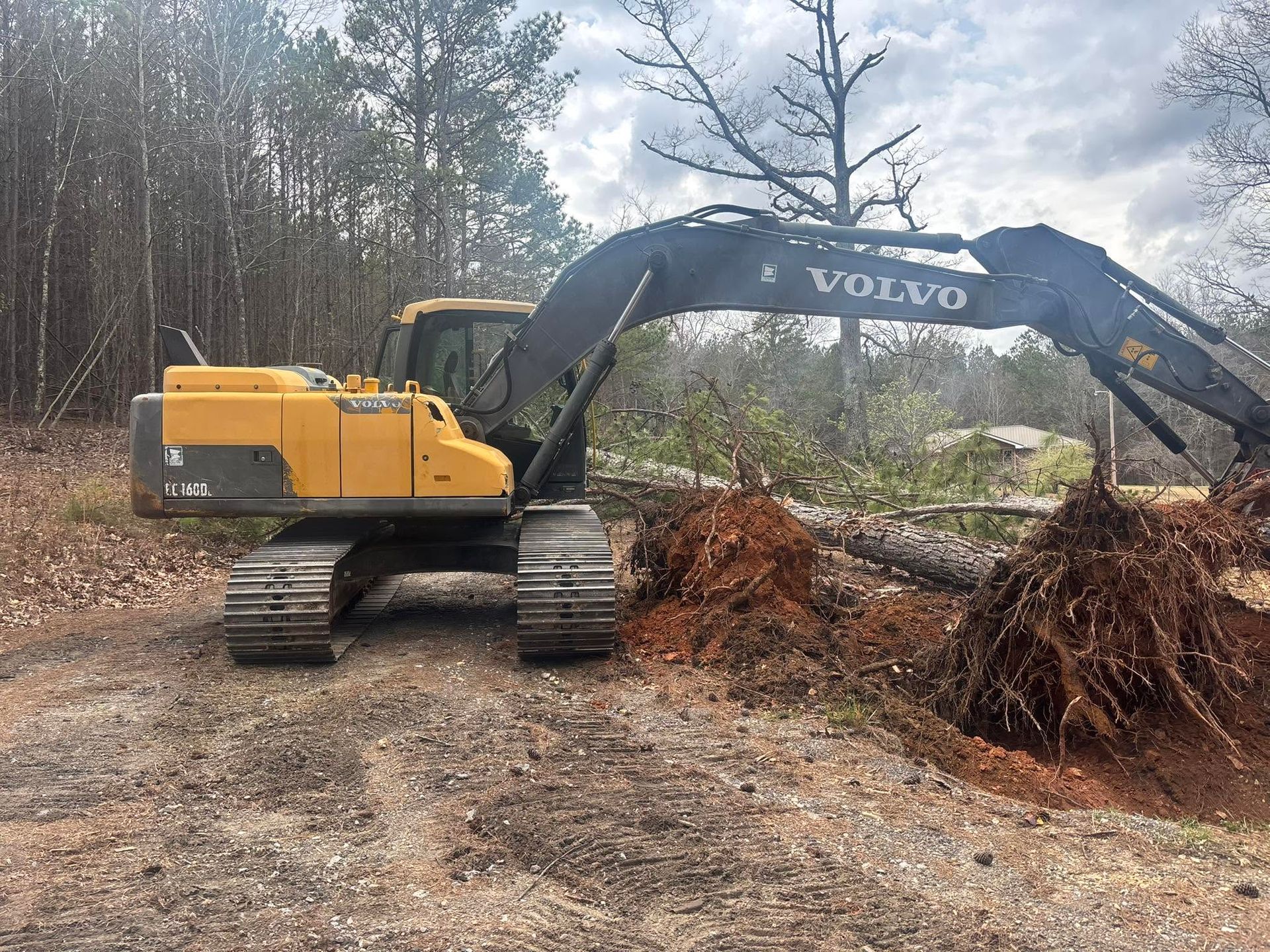
Clay-heavy soils across West Georgia require excavation precision that affects drainage flow and structural stability, particularly when digging for foundation footings, pond construction, or drainage channels where slope angles determine water movement. Pollard Land Management LLC operates skid steer and heavy equipment for excavation work in Buchanan, Cedartown, Carrollton, and Dallas, maintaining a 60-to-70-mile service radius that excludes Cobb County. Freeze-thaw cycles during winter months impact scheduling as frozen ground increases equipment strain and reduces digging efficiency, while clay soil characteristics require equipment selection based on moisture content and compaction needs.
Excavation integrates with grading, drainage design, and driveway prep projects where earthwork serves functional purposes beyond simple soil removal. Structural excavation for drainage engineering involves digging trenches at specific grades to maintain gravity flow, removing soil volumes calculated to accommodate pipe diameter and aggregate bedding, and shaping retention areas that hold stormwater during peak rainfall without overflowing into adjacent properties. Seven years of land management experience supports excavation decisions that account for soil behavior, particularly when clay content affects compaction and water infiltration rates.
Schedule an on-site evaluation to assess excavation depth requirements and soil conditions for your drainage or site prep project.
What Excavation Quality Requires Beyond Digging
Structural excavation differs from site clearing in that soil removal must achieve specific depth, width, and slope tolerances that affect system performance. Drainage excavation requires trenches graded to maintain consistent downhill flow, typically one-quarter inch per foot minimum to prevent standing water that clogs pipes with sediment. Foundation excavation involves removing soil to bearing layer depth specified by engineering plans, with sidewalls cut vertically enough to support formwork without excessive overdig that increases concrete volume and cost.
Once excavation work completes, you'll notice trenches with stable sidewalls that don't slough soil into the dig area during rain, excavated material stockpiled for reuse as backfill or hauled offsite when unsuitable for compaction, and bottom surfaces free of loose debris that would compromise drainage aggregate or foundation bearing capacity. Proper excavation eliminates rework caused by inadequate depth, incorrect slope, or unstable soil conditions that require additional digging after initial passes.
Equipment operation accounts for soil type and moisture levels, as clay soils excavate differently when dry versus saturated. Winter ground freeze limits excavation operations between late December and early March when frozen soil resists digging and increases equipment wear. Service radius discipline excludes zones where drive time exceeds profitability thresholds, focusing excavation availability on properties within the core North Georgia territory where repeat work and efficient routing maintain cost competitiveness.
Questions About Excavation Work in West Georgia
Excavation projects depend on soil conditions, depth requirements, and functional performance expectations that vary across residential and commercial applications.
How does clay soil in Buchanan affect excavation difficulty?
Clay-heavy soils common across West Georgia require equipment with sufficient power to break compacted layers, and moisture content significantly impacts digging efficiency—wet clay becomes sticky and heavy, while dry clay hardens and resists penetration, both affecting excavation speed and equipment selection.
What's the difference between excavation for drainage versus foundation work?
Drainage excavation prioritizes slope accuracy to maintain gravity flow and trench width to accommodate pipe and aggregate bedding, while foundation excavation focuses on reaching engineered bearing depth and maintaining vertical sidewalls that support concrete formwork without collapsing.
Why does freeze-thaw cycle timing matter for excavation scheduling?
Frozen ground between late December and early March prevents efficient digging as equipment struggles to penetrate frozen soil layers, so excavation projects ideally occur during months when ground remains workable and soil can be properly compacted after backfilling.
How does seven-year land management experience affect excavation quality?
Experience managing soil behavior across North Georgia projects informs decisions about excavation depth, sidewall stability, and compaction requirements that prevent settling or drainage failure after trenches are backfilled and systems become operational.
What determines excavation cost per cubic yard?
Soil type, digging depth, equipment access difficulty, and disposal requirements all affect pricing—clay soils take longer to excavate than sandy loam, deeper digs require more equipment time, and hauling excavated material offsite adds cost compared to stockpiling on-site for reuse.
Pollard Land Management LLC handles excavation work integrated with drainage design and site prep projects across Paulding and Douglas Counties. Call (770) 713-0972 to discuss excavation depth, soil conditions, and project scope for your property.